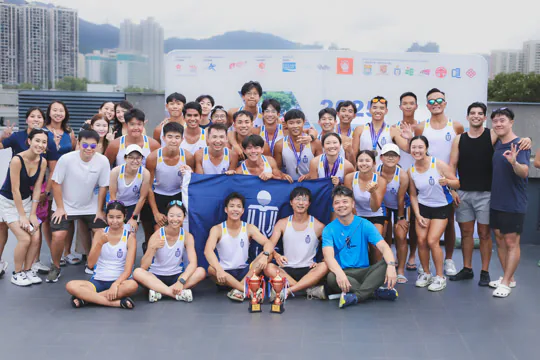
A Race before the Submission Deadline
The pressure of looming deadlines—sharpened by the heavy atmosphere after the Tai Po inferno—sat on my chest. Still, I put the anxiety aside and boarded the bus to Hengqin with the HKUST rowing team members. As we pulled away, the sunset outside the window felt like a quiet send-off, wishing us good luck. We had no clear expectations of how we would measure up against international crews, and I couldn’t stop replaying the cracks exposed in training: Would we stay perfectly synchronized at high stroke rates? If the wind rose, could we keep the boat balanced? My teammates smiled and reassured me: we’ll just do our best and enjoy the race. Even so, tension hung in the air while our coxswain carefully walked through the planned calls for the heat.
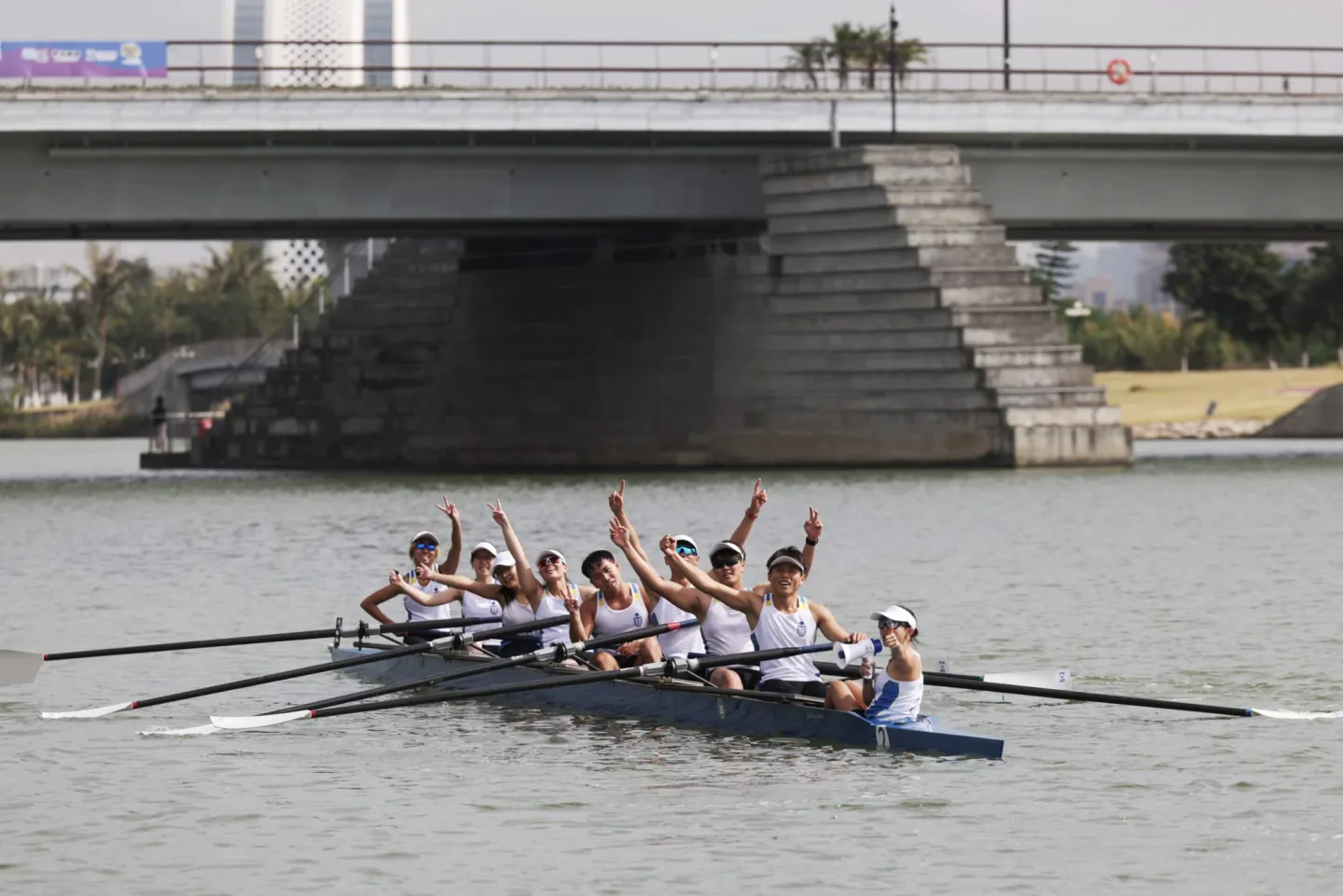
The minutes before the start were chaotic. Later, Sharon pointed out that some of the confusion was on Juni and me. But once we were off, our start was clean and powerful. We moved ahead quickly, leaving the Cambridge & Oxford crew and Peking University behind us—my first time feeling our boat take the lead right from the opening strokes. The wind and spray swallowed Yoyo’s voice, and my mind went blank in the best way. I narrowed my world to one job: follow No. 8—catch, drive, finish, recover; square the blade. Movements we had repeated thousands of times returned as instinct. Midway through, the handle suddenly felt heavier, as if the water itself thickened. Even with the other boats fading behind, I couldn’t unclench. I held on tighter and locked the blade into the water. Then the horn cut through everything: we had crossed the finish line. We won.
The heat broke the long spell of gloom I’d been carrying. After a short rest, we cheered for other teams under another brilliant sunset. Kites drifted above the course, and the last light rinsed everyone’s faces. In the evening breeze, we watched performances from different universities, and without warning my eyes stung—this was the community I loved, the place I felt I belonged. Whatever happened the next day, we had already earned a story worth keeping: we had outrun the tall, powerful Cambridge and Oxford crew.
By the next morning my hands had stopped shaking, but my body was nowhere near ready for another all-out race. The sudden schedule change cut our sleep, and it rattled everyone. Still, we adapted and threw ourselves back into preparation. Our captain adjusted the sprint technique—shifting from half-slide strokes to not leaning back—something some of us had barely practiced. When we finally lined up in our lane, Sharon shouted “Attention!” and before some of us even registered the signal, the race was already on. I tried to do what Austin had taught me: picture the blade, sit tall, eyes forward. We stayed tightly in the chase. At first, the Malaysian and Tongji boats sounded close beside us, but then we began to drift—dangerously—toward the Malaysian team’s lane. The umpire whipped the white flag. Yoyo yelled, “Stroke side harder!” I pushed, but my legs had nothing left to give. We clawed our way back into our lane. Even when it was clear we no longer had a real shot at winning, every one of us kept pulling with whatever remained.
One horn, then another. A few seconds later we crossed the finish line—just a few seconds behind. I saw Steven collapse onto the boat, letting one leg trail into the water. We were emptied out. We paddled lightly back to the pontoon, where the Men’s Eight and Terry welcomed us and gently helped bring the boat ashore. We hugged, high-fived, and kept each other upright with small jokes and quieter encouragement. Underneath it all, though, a thin regret stayed with me. Since I started rowing last year, this was the first time I truly felt how close we were to winning. Maybe this is what it means to not want to give up. If I keep rowing, will we win one day? Or will my height and weight always be something I can’t quite make up for?
I’ll never know if I give up.